My Philosophy of Teaching
I believe that my role as a teacher is to facilitate rather than instruct. This adheres to my constructivist view that emphasises the active role a student plays in their own learning. For effective learning to occur, students need to have an inquiring mind, and actively construct their own understandings. This is achieved by following the principles of Kath Murdoch and Jeni Wilson in providing a classroom environment that is focused on independent learning through critical and creative thinking and inquiry. This is aided by providing engaging classroom activities that include effective questioning, group discussions and peer interaction. I aim for learners to be intrinsically motivated by a deep curiosity that inspires them to think for themselves, whilst also respecting each other’s opinions. I am influenced by the work of Barrie Bennett and his work on instructional integration in the classroom. This includes using cooperative learning, concept attainment, Bloom’s levels of questioning and using de Bono’s 6 Thinking Hats in the classroom. My lesson design has been modeled on Madeline Hunter’s work and includes an explicit goal that is visible for the students to see in every lesson. I have high expectations for all students and believe in helping each child reach their full potential by acknowledging the differences in students’ learning style. I am influenced by Gardner’s Multiple Intelligences which enables me to approach the same topic in a variety of ways, thus engaging all students at their own level. I also scaffold my lessons, providing learners with the level of assistance needed to enable them to engage in the learning experience. Another strategy I use is teacher modeling. This allows me to show students my thought processes and meta cognitive approaches to learning which is an important skill for learners to acquire.
I believe assessment of student learning is best achieved by using a holistic approach, which focuses primarily on formative assessment, whilst using diagnostic and summative assessments where appropriate. This provides me with ongoing feedback which allows me to continually adapt my teaching to the needs of the students. Assessment tasks are designed to target the outcomes that is specifically being assessed and may be written, verbal, electronic (Socrative) or an inquiry research project. I believe learners need to be taught how to reflect on their own learning, using self-assessment to periodically evaluate their strengths and weaknesses, and using these to set their future learning goals. Finally I consider myself a life-long learner, continually learning from students, other teachers and opportunities for professional development. Self-reflection enables me to continually evaluate my own teaching, and reflective practice with colleagues provides me with alternative viewpoints and teaching strategies.
|
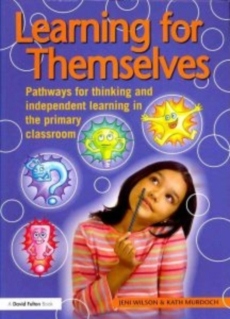 Learning for Themselves by Jeni Wilson and Kath Murdoch. 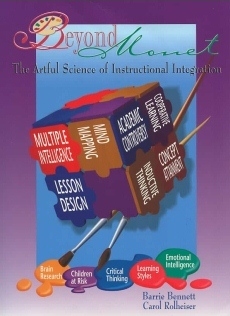 Beyond Monet by Barrie Bennett and Carol Rolheiser. 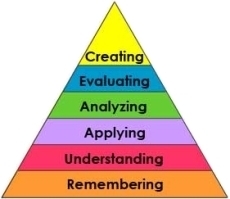 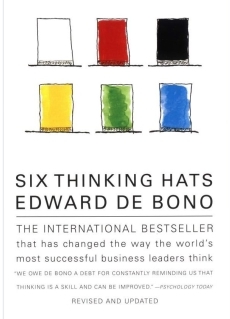 Six Thinking Hats by Edward De Bono. 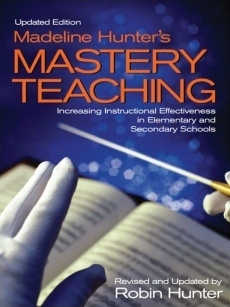 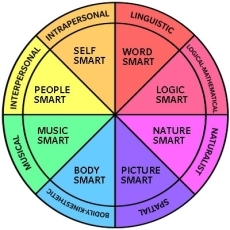 Howard Gardner's Multiple Intelligences Theory.  Lifelong learning is the goal. |
|
|
Make a Free Website with Yola.
